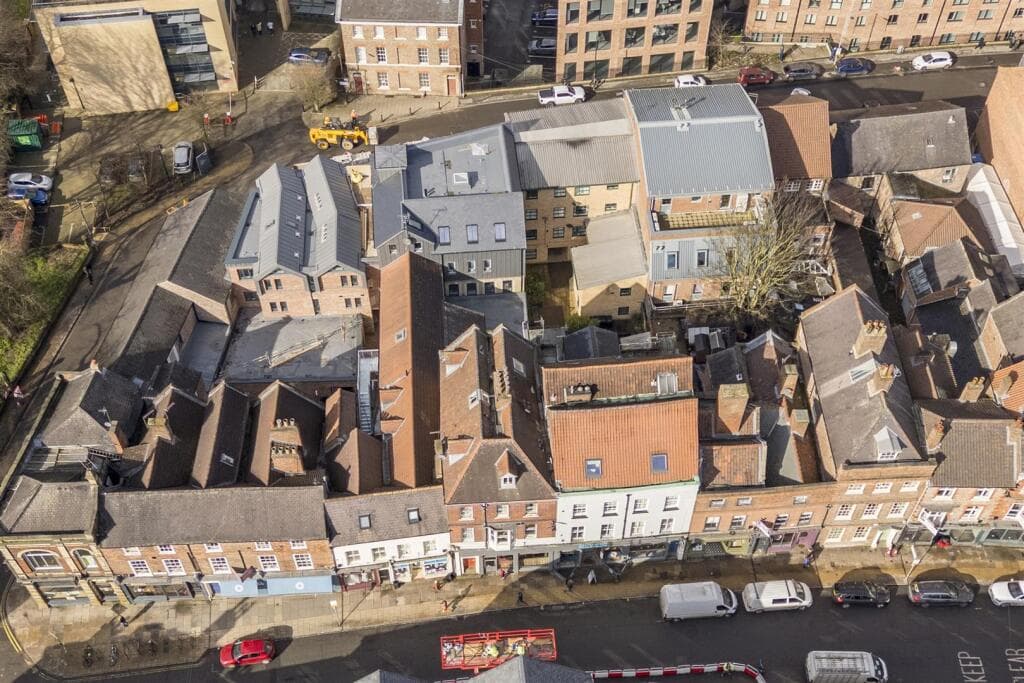
What Is a Flying Freehold?
A flying freehold exists where part of a freehold property overhangs or sits beneath land owned by someone else, without the land below (or above) forming part of the same title.
In simple terms, part of your property is physically supported by or located above another property that you do not own.
Common examples include:
• A room that extends over a shared passageway
• A first-floor flat that overhangs a neighbouring property
• A balcony or bay window projecting over adjoining land
• Basement rooms extending beneath another building
These situations typically arise in older buildings constructed before modern title structures existed, particularly in historic city centres.
Because the structural elements supporting your property sit within someone else's title, this creates legal dependencies between properties.
Why Lenders Can Be Cautious
Many mortgage lenders will lend on flying freeholds, but not all lenders are comfortable, and those that are usually impose specific conditions.
The concern is not the physical structure itself.
The concern is legal enforceability.
Lenders want to know that if something goes wrong structurally, the owner of the adjoining property cannot simply refuse to cooperate.
For example:
• If a supporting wall requires repair
• If roof structures need access from the neighbouring property
• If maintenance work requires entry onto adjacent land
Without clear legal rights written into the title, disputes could arise that affect the structural integrity and value of the property.
As a result, lenders often require:
• Legal rights of support
• Rights of access for repair
• Enforceable maintenance covenants
• Buildings insurance arrangements covering the entire structure
Some lenders also apply limits such as:
• Flying freehold area must be less than 20% of the total property
• Adequate legal rights must exist in the title documents
• Indemnity insurance may be required
Each lender has its own policy, which is why experienced conveyancing is essential when dealing with these structures.
Insurance Complications
Insurance can also be more complicated with flying freeholds.
Because structural elements of the building may sit within multiple freehold titles, insurers need clarity on:
• Who is responsible for insuring the structure
• Whether the entire building is insured under one policy
• How claims affecting structural support would be handled
In many cases, the most practical solution is:
A single buildings insurance policy covering the entire structure.
Each property owner then contributes their fair proportion of the premium, usually based on floor area or rebuilding value.
This arrangement reduces disputes and ensures that structural risks are properly covered.
Where separate insurance policies exist, problems can arise if:
• One owner fails to maintain insurance
• Policy terms conflict
• Structural damage affects multiple titles
For lenders, this lack of coordination creates additional risk.
The Legal Protections You Want in the Title
When purchasing a property that includes a flying freehold element, your solicitor should be checking for several critical legal protections.
These are usually written into the transfer deed or title covenants.
1. Rights of Structural Support
Your property must have an explicit legal right to be supported by the adjoining structure.
Without this, there is technically no enforceable obligation preventing the neighbouring owner from altering supporting structures.
2. Rights of Access for Repair
Maintenance of flying freeholds often requires access to neighbouring land.
For example:
• Roof repairs
• Structural reinforcement
• Maintenance of supporting walls
The title should contain clear rights of access for inspection, maintenance and repair.
3. Mutual Repair and Maintenance Covenants
Both parties should have legally enforceable obligations to maintain structural elements affecting the other property.
This ensures that:
• Supporting structures remain safe
• Repair costs can be shared fairly
• One owner cannot neglect structural responsibilities
4. Cost Sharing Provisions
Where parts of the building support multiple properties, the legal documents should set out how costs are divided.
Often this is described as paying a “fair proportion” of repair costs.
Without this clause, disputes about repair responsibilities become far more likely.
5. Insurance Obligations
Ideally the titles should include provisions requiring:
• Buildings insurance to be maintained
• Structural elements affecting both properties to be insured
• Owners to contribute proportionally to the premium
This protects both parties and reassures lenders.
When Indemnity Insurance Is Used
If the legal rights above are incomplete or unclear, solicitors sometimes recommend flying freehold indemnity insurance.
This type of policy does not fix the underlying legal issue.
Instead, it provides financial protection if a dispute arises that reduces the property's value.
Some lenders accept indemnity policies where legal rights are weak. Others prefer proper title rights to exist instead.
From an investor perspective, strong legal documentation is always preferable to relying solely on insurance.
Why Due Diligence Matters
Flying freeholds are not automatically a problem.
Many historic buildings across the UK include them, and thousands of properties are bought and sold every year with these structures.
The key issue is how well the legal framework has been documented.
Before completing a purchase you should ensure:
• Your solicitor has fully reviewed the title
• Adequate rights and covenants exist
• The lender is satisfied
• Insurance arrangements are workable
When these elements are properly structured, flying freeholds can be managed without issue.
Final Thoughts
Older buildings often come with legal complexities that modern developments simply do not have.
Flying freeholds are one of those complexities.
Handled poorly, they can create difficulties with lenders, insurers and future buyers.
Handled correctly, they are simply another aspect of property law that needs to be properly understood and documented.
As with many things in property investing, the real risk is not complexity.
The real risk is failing to carry out the right due diligence before you buy.